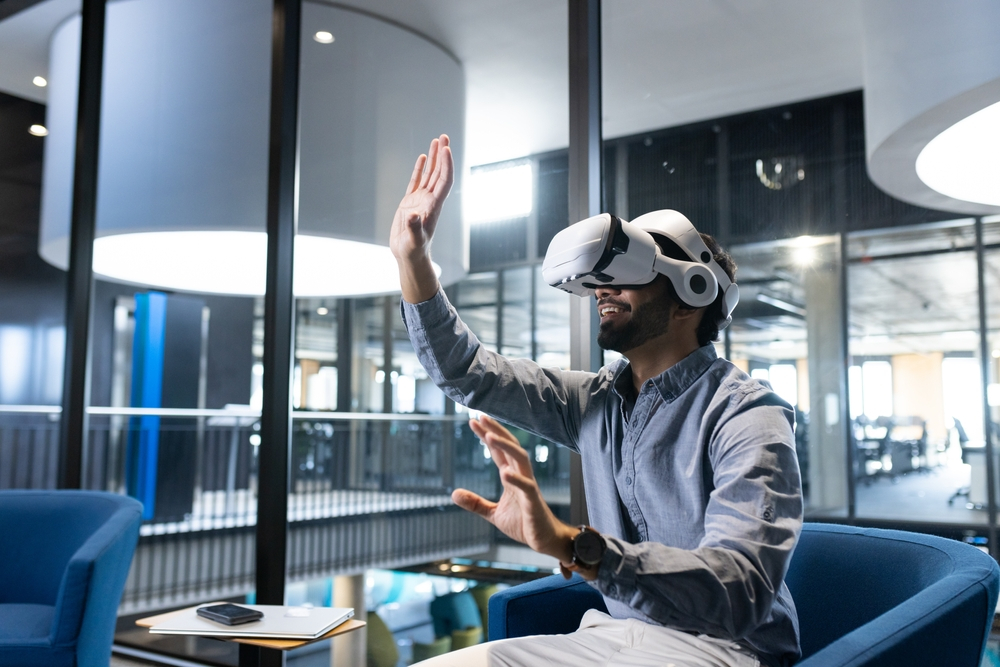


Virtual Reality (VR) training represents a significant technological shift in learning and development, utilizing immersive, interactive digital simulations to foster skill acquisition across a multitude of industries. By placing learners within realistic, computer-generated environments using specialized hardware like head-mounted displays (HMDs) and controllers, VR training moves beyond traditional passive knowledge transfer towards active, experiential learning – “learning by doing” in a controlled, safe setting. This approach is particularly potent for scenarios deemed too dangerous, costly, or complex for real-world practice.
The core advantages of VR training are compelling and increasingly supported by empirical evidence. Key benefits include accelerated learning and significantly improved knowledge retention, attributed to heightened engagement, focus, emotional connection, and the ability for safe, repetitive practice. Studies indicate learners can train up to four times faster than in traditional classrooms and demonstrate substantially higher confidence in applying learned skills. Furthermore, VR offers unparalleled safety for training in high-risk environments (e.g., surgery, hazardous material handling, combat), allowing skill development without real-world consequences and demonstrably reducing subsequent workplace errors and accidents. At scale, VR training can achieve significant cost-effectiveness, reducing expenses related to travel, physical resources, and operational downtime, leading to a strong return on investment (ROI) for large deployments.
Prominent applications span diverse sectors. Healthcare utilizes VR for surgical simulation, anatomy education, and empathy training. Manufacturing and engineering leverage it for equipment operation, assembly line procedures, and safety protocol training. Aviation, military, and emergency services employ VR for flight simulation, tactical exercises, and disaster response preparation. Corporate and educational institutions use it for onboarding, compliance, and developing crucial soft skills like customer service and leadership.
Looking ahead, the future of VR training appears robust, driven by continuous hardware advancements (lighter headsets, higher resolution, wider field of view, improved haptics), wider market adoption, and particularly the integration of Artificial Intelligence (AI). AI promises to enhance realism, enable adaptive learning pathways tailored to individual needs, and provide sophisticated real-time performance analytics, further amplifying the effectiveness and personalization of immersive training experiences.
Virtual Reality (VR) training fundamentally involves the application of virtual reality simulations to create and deliver immersive, interactive learning experiences. It is characterized as the digital simulation of lifelike scenarios specifically designed for training purposes. In a VR training environment, trainees enter a 360-degree, active learning space where simulated sights and sounds work to dissolve the barrier between the virtual and actual reality. Utilizing specialized electronic equipment, primarily a head-mounted display (HMD) and often hand controllers or other input devices, learners can look, speak, and move within a three-dimensional virtual setting. This setup allows them to interact with simulated tools, machinery, environments, and even virtual representations of other trainees or instructors.
The core objective underpinning VR technology, and by extension VR training, is the creation of an experience that feels completely immersive, effectively tricking the user’s senses into perceiving presence within a different, simulated world. This sensory immersion is pivotal, enabling a pedagogical shift towards “learning by doing”. Instead of passively receiving information, learners actively participate within the simulation, practicing skills and making decisions in a context that mirrors potential real-world applications. This methodology has proven effective for teaching a wide spectrum of competencies, encompassing both ‘hard’ technical skills, such as operating specific equipment or executing complex procedures, and ‘soft’ interpersonal skills, like empathetic communication or leadership decision-making.
A significant driver for the adoption of VR training is its unique capacity to simulate scenarios that are otherwise impractical, prohibitively expensive, or inherently dangerous to replicate through traditional means. Examples include emergency protocols, disaster response drills, handling hazardous materials, working at heights, or performing intricate surgical procedures. VR provides a controlled, safe virtual space where trainees can confront these challenging situations, practice responses, and learn from mistakes without facing real-world consequences. The definition of VR training, therefore, centers on this combination of sensory immersion, active participation through interaction, and the simulation of realistic scenarios, particularly those ill-suited for conventional training approaches. This active engagement within a simulated reality distinguishes VR training from more passive forms of knowledge consumption.
Understanding the effectiveness of VR training requires grasping several core concepts that define the user experience: immersion, presence, interaction, and fidelity. These concepts are interconnected and crucial for designing impactful VR learning environments.
In essence, while immersion describes the technological potential of the VR system to isolate and stimulate the senses, presence is the user’s psychological acceptance of the virtual environment as a place they inhabit. Effective VR training hinges on achieving high levels of both, which is accomplished through well-designed interactions and a sufficient degree of fidelity to make the simulated experience believable and relevant.
VR training represents a departure from established traditional training methodologies, which encompass a range of approaches including classroom-based lectures, instructor-led training (ILT) sessions, on-the-job training (OJT), textual materials (manuals, textbooks), and various forms of e-learning such as computer-based training (CBT), videos, and slideshows.
Traditional methods often rely on a model of knowledge transfer where information is delivered to the learner, frequently characterized by passive learning experiences. Engagement levels can vary significantly and may be lower, particularly with passive formats like lectures or standard e-learning modules. While OJT offers hands-on experience, it can be inconsistent, disruptive, and potentially unsafe for complex or high-risk tasks. A key strength of traditional, particularly in-person, methods lies in facilitating direct face-to-face interaction between trainers and trainees, allowing for immediate, personalized feedback, clarification of doubts, and the development of interpersonal rapport. Furthermore, traditional methods generally have lower initial setup costs and complexity, making them readily accessible for many organizations.
In contrast, VR training fundamentally shifts the focus from passive knowledge reception to active skill acquisition through simulated experience. Its defining characteristic is the high level of immersion provided by HMDs, which effectively isolates learners from real-world distractions, demanding their full attention. Crucially, VR provides a safe, controlled environment for practicing complex or hazardous procedures and learning from errors without any real-world repercussions. This allows for deliberate, repeatable practice to achieve proficiency. VR training is inherently scalable and consistent; once a simulation is developed, it can be deployed to numerous users across diverse geographical locations, ensuring a standardized learning experience accessible anytime, anywhere.
The fundamental distinction lies in the learning paradigm: traditional methods often focus on delivering information, while VR training prioritizes skill development through active, simulated practice. VR directly addresses the limitations of traditional approaches in providing safe, engaging, consistent, and repeatable hands-on experience, especially for tasks that are complex, dangerous, or require significant practical application.
The adoption of VR training is driven by a compelling set of advantages over traditional methods, impacting learning effectiveness, safety, engagement, cost-efficiency, and scalability. These benefits are increasingly substantiated by research and real-world implementation data.
One of the most frequently cited and empirically supported benefits of VR training is its ability to significantly improve knowledge retention and the subsequent transfer of learned skills to real-world performance, surpassing traditional classroom or e-learning approaches. This advantage stems from the core nature of VR learning. The experiential “learning by doing” approach, where learners actively participate rather than passively receive information, aligns with established learning principles suggesting higher retention rates for simulated or performed actions compared to reading or hearing.
Several underlying factors contribute to this enhanced retention. The immersive quality of VR engages multiple senses (visual, auditory, kinesthetic), creating a richer learning context. This multi-sensory engagement, combined with the feeling of presence, leads to stronger neural connections and memory encoding. VR environments inherently minimize external distractions, allowing learners to maintain higher levels of focus on the training content. Furthermore, the ability to evoke realistic emotional responses (emotional fidelity) makes the learning experience more memorable and impactful. The capacity for safe, consequence-free repetition allows learners to practice until mastery, reinforcing skills and knowledge through repeated application.
Quantitative studies support these claims.
Crucially, this improved retention translates into better skill transfer and real-world application. The realistic practice, often involving motor skills and decision-making under simulated pressure, helps build muscle memory and procedural fluency. Consequently, learners consistently report significantly higher confidence in their ability to apply the skills learned in VR training to their actual jobs.
This confluence of active participation, sensory immersion, emotional resonance, and safe repetition appears to leverage deeper cognitive processes, resulting in learning that is not only retained better but also applied more confidently and effectively.
A paramount advantage of VR training lies in its capacity to create a completely safe and risk-free learning environment, which is particularly transformative for industries where traditional training methods carry inherent dangers or high consequences for error. VR allows trainees to repeatedly practice hazardous tasks, complex procedures, and emergency response protocols within controlled virtual simulations, eliminating any risk of physical harm to the trainee, damage to expensive equipment, or negative impact on operations or patient safety.
This safety aspect is invaluable across numerous sectors.
The ability to learn from mistakes within these safe simulations is a critical pedagogical benefit. Trainees can experience the potential outcomes of incorrect actions, understand why certain procedures are critical, and refine their decision-making and problem-solving skills without causing actual harm or incurring costly errors. This iterative process of practice, failure, feedback, and correction fosters deeper understanding and builds confidence.
Importantly, the safety benefits observed in training translate into measurable improvements in real-world safety performance.
VR training effectively resolves the inherent conflict in high-risk fields between the necessity of practical experience and the imperative to avoid harm during the learning process, allowing for the development of critical skills and muscle memory in a zero-consequence environment.
VR training consistently demonstrates a capacity to significantly increase learner engagement and focus compared to traditional training modalities like classroom lectures or standard e-learning modules. This heightened engagement is a key factor contributing to the improved learning outcomes associated with VR.
The immersive nature of VR is central to its engagement potential. By wearing an HMD, the learner’s visual field is dominated by the virtual environment, effectively shutting out real-world distractions such as smartphones, colleagues, or ambient activity. This enforced focus ensures learners dedicate their attention to the training task at hand.
Beyond simply commanding attention, VR actively involves the learner. Unlike passive methods where information is presented for consumption, VR training requires interaction. Learners must navigate the environment, manipulate objects, make decisions, and respond to simulated events, preventing the disengagement or boredom often associated with traditional formats. This active participation makes the learning process more stimulating and memorable.
The realism and emotional fidelity achievable in VR also play a significant role in engagement. When simulations feel authentic and evoke genuine emotional responses (like stress, empathy, or surprise), learners become more invested in the experience.
This emotional connection enhances focus and makes the learning more impactful. Furthermore, the novelty and enjoyment factor of using VR technology can boost initial motivation and engagement.
The combination of focused attention, active participation, emotional investment, and often, enjoyment, makes VR a uniquely engaging training medium, driving the observed improvements in learning speed and retention.
While the initial setup costs for VR training systems are often higher than those for traditional methods, numerous analyses and case studies indicate that VR training can deliver substantial cost savings and a positive Return on Investment (ROI), particularly when implemented at scale over the long term. The financial viability stems from several key areas where VR offers efficiencies over conventional approaches.
A major source of savings is the reduction or elimination of travel-related expenses. Traditional in-person training often requires employees and instructors to travel to specific locations, incurring costs for transportation, accommodation, and meals. VR training can be deployed and accessed anywhere with the necessary equipment, making it ideal for geographically dispersed workforces.
VR training also reduces the need for physical training facilities, materials, and equipment. Costs associated with renting venues, printing manuals, and utilizing or potentially damaging real-world equipment for training purposes are minimized or eliminated.
The accelerated learning pace associated with VR training also contributes to ROI.
Furthermore, the improved safety and performance outcomes resulting from VR training lead to indirect cost savings.
Quantitative analyses highlight this cost-effectiveness at scale.
Thus, the economic justification for VR training strengthens considerably with larger trainee numbers and a longer-term investment perspective, driven by savings in direct training costs and indirect benefits from improved safety and performance.
A significant operational advantage of VR training is its inherent scalability and accessibility, making it particularly well-suited for organizations with large or geographically dispersed workforces. Unlike traditional in-person training, which often faces logistical hurdles in coordinating schedules, securing physical spaces, arranging travel, and ensuring consistent delivery across different instructors and locations, VR training leverages its digital nature to overcome these challenges.
Once VR training content (simulations, modules) has been developed, it can be deployed electronically and reused indefinitely for numerous trainees without significant incremental costs per user. This allows organizations to train thousands of employees across different offices, regions, or even countries simultaneously or asynchronously, ensuring a standardized and consistent learning experience for everyone. Walmart’s rollout of VR training to over 4,600 stores for more than a million employees exemplifies this scalability.
Accessibility is further enhanced by the potential for on-demand learning. Employees can often access VR training modules at times that fit their schedules, reducing disruption to their regular work duties and allowing for self-paced learning. While VR requires specific hardware (headsets), the ability to ship these devices to various locations or establish VR training hubs makes it more logistically feasible for remote or distributed teams compared to bringing everyone to a central training facility. Some platforms even offer web-based or desktop versions of VR content for increased accessibility, albeit with reduced immersion.
Achieving seamless scalability in VR training necessitates robust management infrastructure. Managing a large fleet of VR headsets, deploying and updating content remotely, tracking user progress, and ensuring security requires specialized platforms often referred to as Mobile Device Management (MDM) or VR/XR management systems.
While VR technology is inherently scalable due to its digital format, practical implementation at scale depends heavily on these supporting management systems to handle the logistical complexities.
The versatility and unique capabilities of VR training have led to its adoption across a wide array of industries, addressing specific training needs and challenges within each sector. Key application areas include healthcare, manufacturing and engineering, aviation, military, emergency services, education, and corporate training.
The healthcare sector has been an early and enthusiastic adopter of VR training, leveraging the technology to address critical needs in education, skill development, and patient interaction.
In the manufacturing and engineering sectors, VR training is increasingly utilized to improve operational efficiency, enhance worker safety, and streamline complex processes.
In essence, VR training in manufacturing and engineering directly addresses the critical imperatives of worker safety and operational efficiency. By providing a platform for risk-free practice of hazardous tasks and complex manual procedures, VR helps mitigate both physical dangers and the economic costs associated with errors, equipment damage, and production downtime, while ensuring standardized skill development.
These sectors, characterized by high-stakes operations, complex equipment, and the need for rapid decision-making under pressure, have long utilized simulation technologies, making VR a natural and powerful extension for training.
For aviation, military, and emergency services, VR’s ability to safely, cost-effectively, and repeatedly simulate high-risk, high-stress, and logistically demanding scenarios makes it an invaluable tool for ensuring operational readiness, improving decision-making, and ultimately saving lives.
Beyond high-risk industries, VR training is making significant inroads into general education and corporate L&D, particularly for developing soft skills, onboarding new employees, visualizing complex information, and delivering compliance training in an engaging manner.
These diverse applications demonstrate VR’s potential to enhance both cognitive understanding and behavioral skills across a wide range of corporate and educational contexts, moving beyond niche technical training into broader areas like interpersonal skills and foundational learning.
Assessing the effectiveness of VR training involves examining its impact on skill acquisition, performance improvement, and ultimately, the return on investment (ROI) for organizations that implement it. A growing body of research, including meta-analyses and case studies, provides evidence supporting VR’s efficacy compared to traditional methods.
Studies consistently show that VR training leads to measurable improvements in skill acquisition and task performance across various domains. Meta-analyses comparing VR training to traditional education or no training often find that VR groups perform significantly better or at least equivalently.
These findings, drawn from meta-analyses, controlled studies, and large-scale corporate implementations, collectively indicate that VR training is an effective modality for acquiring both technical and soft skills, often leading to faster learning, better retention, higher confidence, and improved performance compared to conventional approaches.